
People ask me what it is like to volunteer at an animal shelter, and the honest answer is that it looks nothing like the photos. It is early mornings, it is heat, it is cleaning, and every so often it is a morning that turns into a rescue mission you did not plan for. Let me tell you a story:
A few years ago I volunteered for one month at Peluditos de La Manzanilla, a small animal rescue on Mexico’s Pacific coast. The team provides shelter, medical care, and a second chance for abandoned animals. I helped wherever it was needed: daily care, health checks, walks and simply giving the animals attention and socialize them.
This is what those four weeks actually looked like.
Where I Stayed and How the Days Were Structured
I helped out around 25 hours a week, and I had a place to stay through Ginny.
I want to say something about that, because it is not a given. Volunteers accommodation (if available) is often a shared room/apartment, sometimes with bunk beds and a shared bathroom as well. We (my partner and I) had our own cozy apartment, a terrace with hammocks, and a host who was always around when I had questions. Ginny gave us endless recommendations for things to do in La Manzanilla during our free time and made sure we felt at home from day one. If you ever get hosted like that, appreciate it.
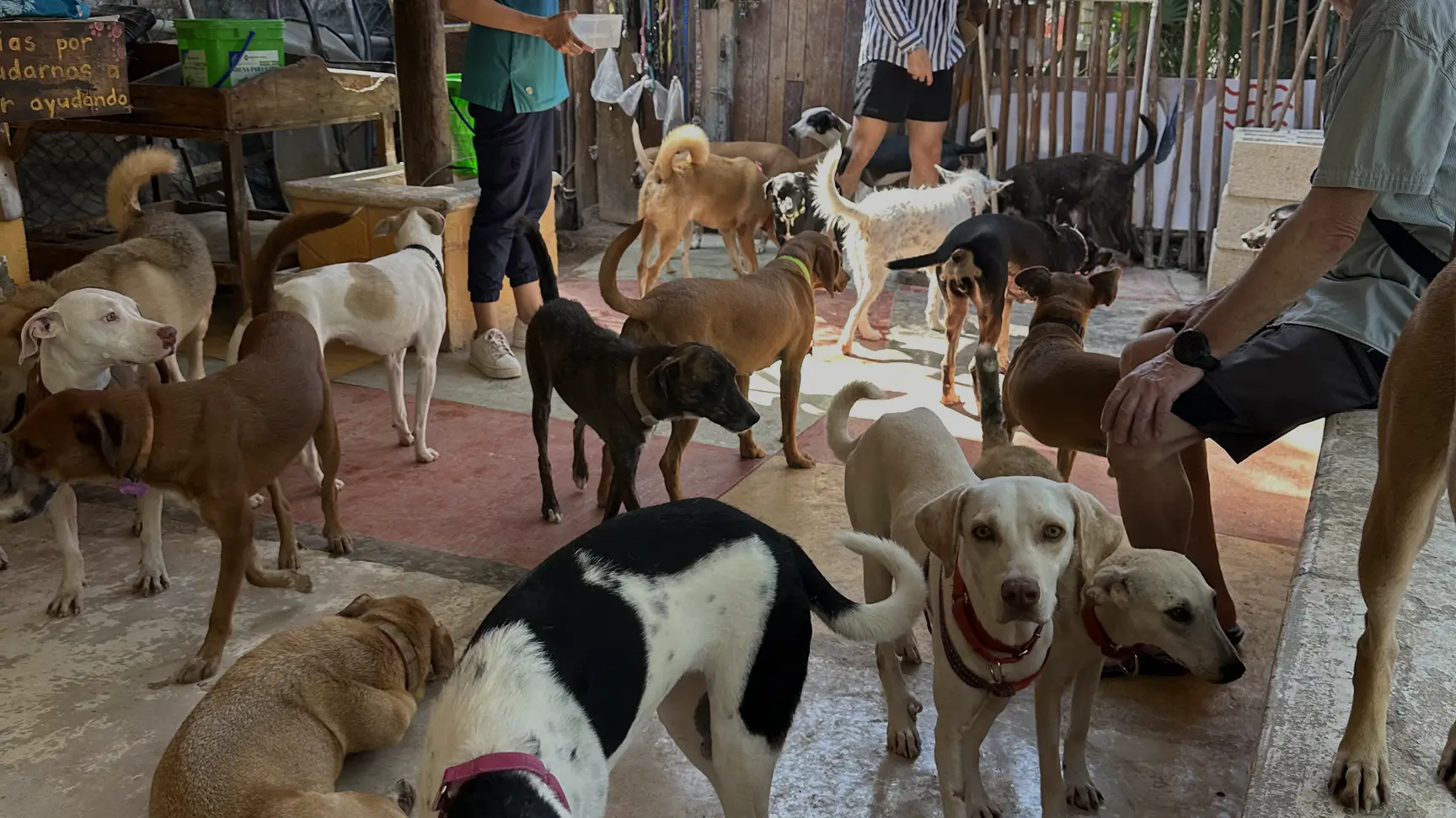
On our first day at the rescue we were introduced to the animals and our tasks. I walked through the sanctuary and met:
- Ten dogs living together in a large outdoor area
- A horse
- Jazz, the donkey
- Scarlett, the pig
- Smaller enclosures housing groups of two to four dogs
Keeping the dog groups small reduced fights and gave every animal a safe space while waiting for a forever home. It is one of those details you only notice from the inside.
Laura, the manager of Peluditos, had one key principle: “Work independently, take initiative, and always put the animals’ well-being first.” She managed social media, secured donations, coordinated medical care, and drove animals to the vet, but she was always reachable, in person or on WhatsApp, to answer questions and give guidance.
That trust shaped the whole month. We structured our own days around what suited the animals best and settled into a rhythm built around the cooler hours: mornings from 8 to 10:30, afternoons from 4:30 to 7. Both animals and volunteers stayed comfortable that way.
What It Is Like to Volunteer at an Animal Shelter, Day to Day
No two days at the rescue looked the same. In my first week alone we:
- Did health checks on all the dogs, after Laura taught us what to look for
- Brushed the long haired dogs to keep them comfortable in the heat
- Cleaned the large outdoor areas, a never ending but necessary task
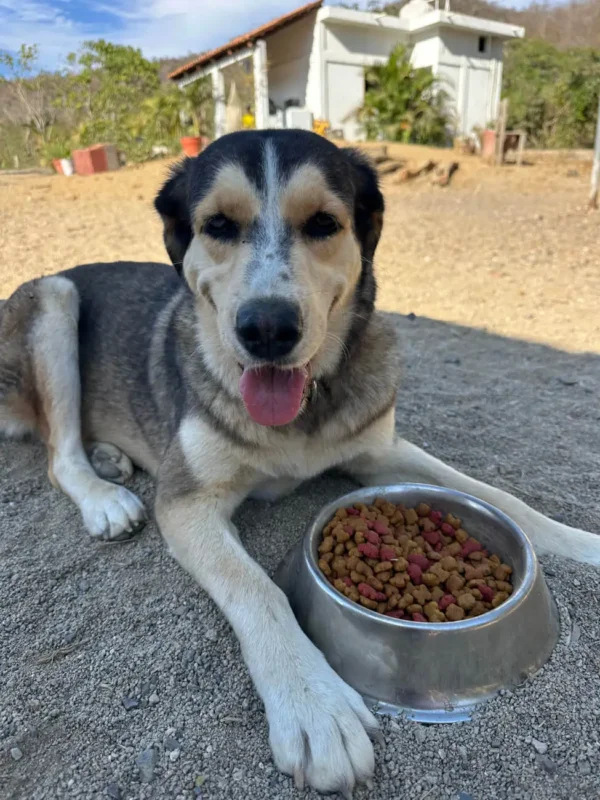
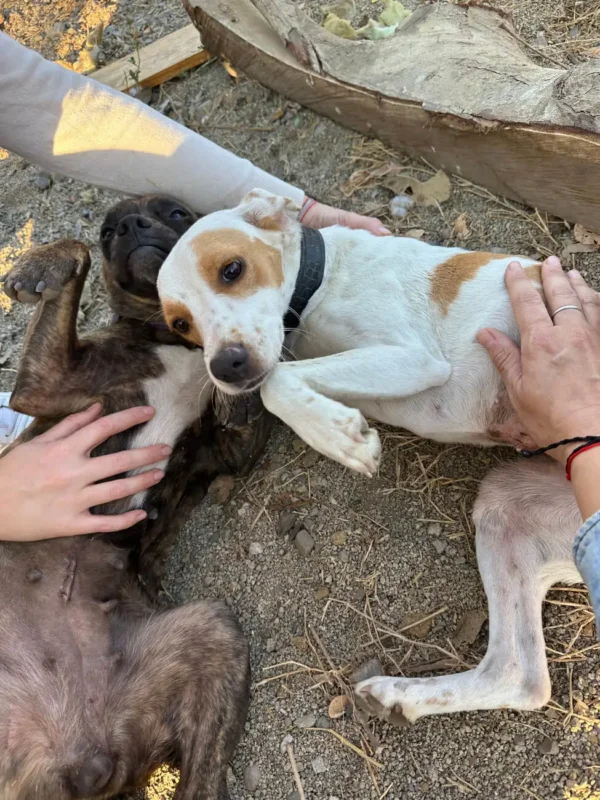
- Cared for puppies and played with the dogs, because socialization directly affects adoptability
- Fixed small things: repairing fences, replacing broken water buckets, improving enclosures
If you are wondering whether you need previous experience to volunteer at an animal shelter, this is your answer. Most of it is willingness, attention, and being reliable at 8 in the morning.
The Rescue Mission That Changed Our Whole Structure
One morning, as we were heading to the rescue, Laura pulled up on her quad with her young son and said:
"Ladies, today is an adventure!"
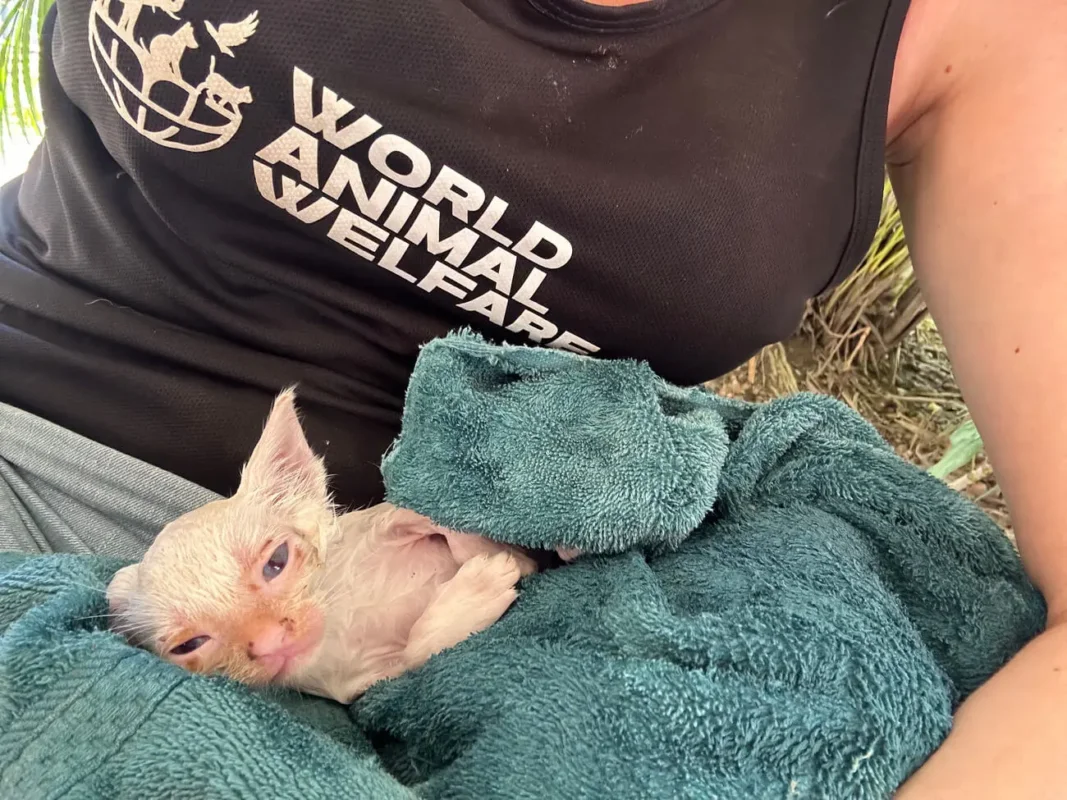
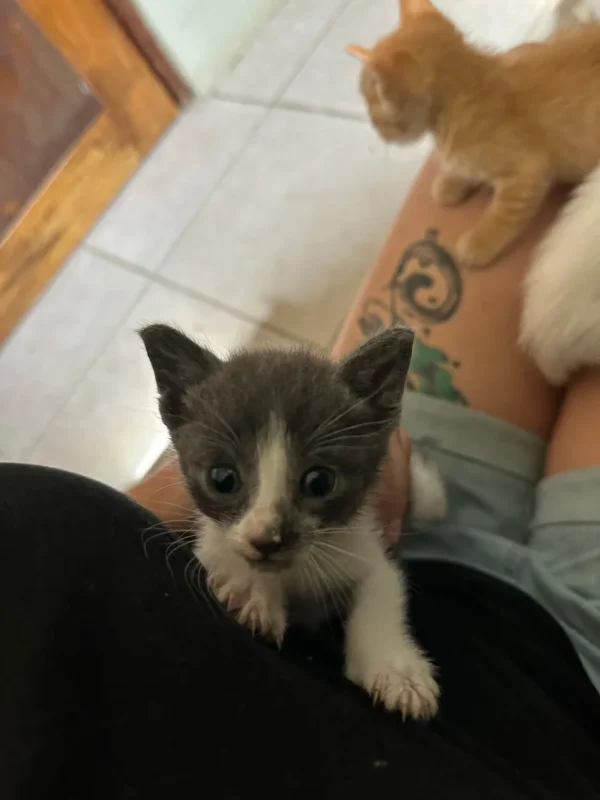
We had no idea what to expect. Soon we were driving out to meet a woman who had found seven abandoned kittens. When we arrived, we saw tiny, malnourished kittens badly in need of care. Some were alarmingly thin, their eyes swollen with infection, their future uncertain. We took them in without hesitation
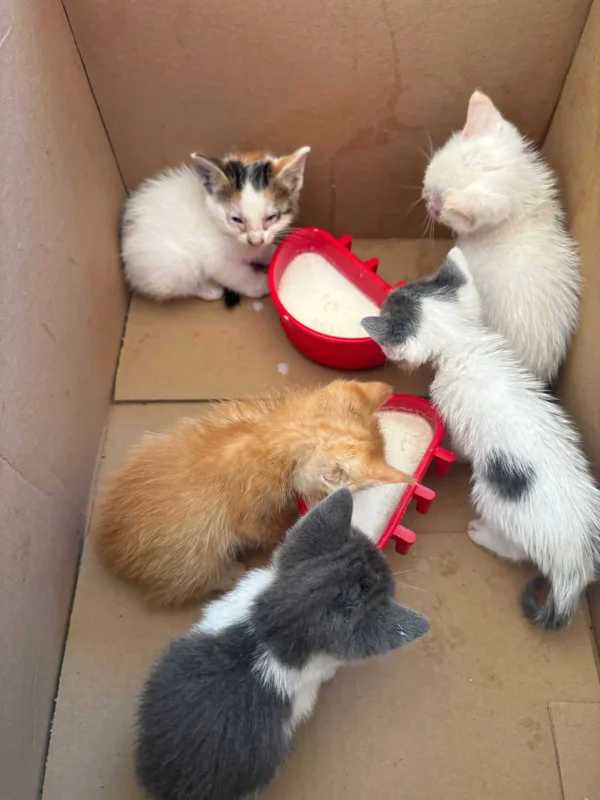
They were too young for the rescue itself, so they moved in with us. Our bathroom became a kitten nursery, and we named them after Harry Potter characters:
- Moony, a pure white ball of fluff
- James, a striking tricolor
- Sirius, white with a single black ear
- Ron, an energetic ginger
- Hermione and Draco, two tiny gray babies
- Harry, the smallest, white with dark spots
Caring for them became our biggest responsibility. The three smallest needed round the clock feeding for the first few days. We didn’t know if the 3 weakest will survive. All of them needed eye drops twice a day for their infections. We watched them grow stronger, their energy return, and their personalities come out. Now we knew: they will survive!
Five of the healthier kittens were eventually taken in by a sister organization to go into foster homes and, from there, into adoption. Hermione and Harry, the weakest of the group, stayed with us until they were strong enough to live within the shelter.
More Than Just Walking Dogs
Even with the kittens, we kept up our daily rescue tasks. One of the best parts of the routine was taking the dogs out.
Laura showed us the routes, and from then on we made it a priority to get as many dogs as possible outside their enclosures. Each day we walked four to eight dogs, two per person, and sometimes managed several rounds. Watching their tails wag as they explored the world outside was its own reward.
But if you ask me what the best part of the day actually was, it was not the walks. It was sitting down.
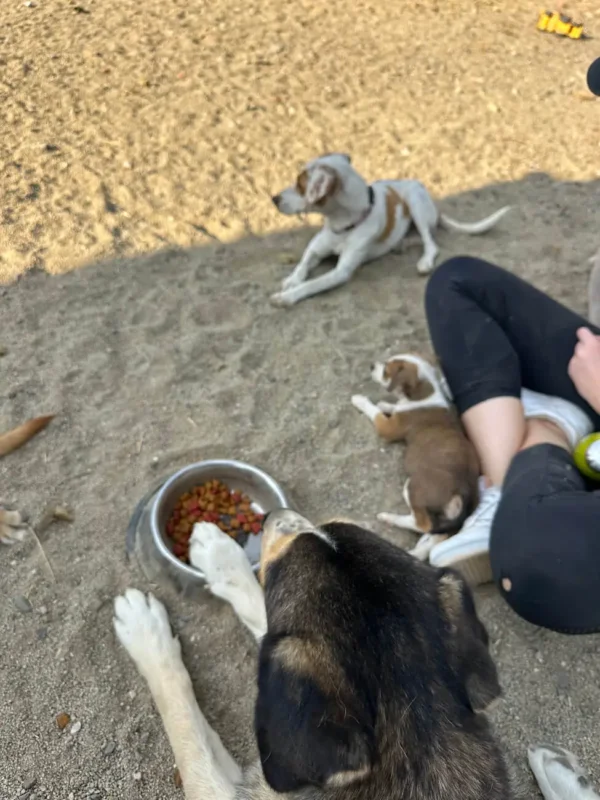
Some afternoons I would just walk into the outdoor area, sit down in the sand, and wait. Nothing more. No task, no plan. After a while the first dog would come over and lie down next to me. Then another would wander across, sniff around, and settle in too. A puppy might climb straight into my lap and fall asleep mid-chew. Thirty or forty minutes in, half the pack had rearranged itself around wherever I happened to be sitting, and I could watch the whole dynamic shift in real time: who approached first, who hung back, who nudged whom out of the way for a spot closer to me.
It sounds like nothing, and it was everything. You do not get to see a group of dogs behave like a group unless you stop moving long enough for them to forget you brought a task with you.
We also picked up basic medical care along the way, treating minor wounds when we spotted them. Laura trusted us to handle these small tasks on our own, which built our confidence and our connection to the animals.
The Emotional Goodbye
By the end of the four weeks, I could see the impact I had made. But what stayed with me most was how much these animals had changed me. Every morning they greeted us with pure excitement, tails wagging as if we had been gone for months.
I had arrived knowing roughly what to expect from a volunteering trip. By the time I left, I had formed real bonds, not just with the dogs but with the rescue team and the community working hard to give these animals a second chance.
Leaving them behind truly broke our hearts, and I’m sorry to say so: that won’t change with more volunteer experience. Every volunteer job I did after that one was exactly the same. The heartbreak at the end. But I can promise you, it is all worth it.
That is the part nobody tells you about volunteering with animals. You go in thinking you are the one giving something.
What to Expect if You Are Volunteering in Mexico
A few things I would have liked to know beforehand, based on that month on the Pacific coast:
- The heat sets the schedule. Work happens early and late. Midday belongs to the animals resting in the shade, and to you doing the same.
- Some Spanish goes a long way. Not for the animals, but for the team, the neighbours, and the woman who turns up with seven kittens in a box.
- Structure is loose on purpose. Not very often somebody hands you a shift plan. Most of the times you are trusted to see what needs doing and do it, which is either liberating or unsettling depending on your temperament.
- Plans change without warning. A normal morning can turn into a two hour drive and a bathroom full of kittens. Flexibility matters more than experience.
- It is physical. Cleaning enclosures, walking multiple dogs in the sun, carrying water. You will sleep well.
Why I Keep Going Back
If you are looking for a volunteering experience that actually matters, volunteering with animals it is:
It is real, hands on rescue work. You do not just help, you change things. You learn a lot: dog behavior, basic medical care, problem solving, teamwork.
It is emotionally rewarding. Watching a once neglected animal thrive because of your effort is a feeling of its own.
Would I do it again? In a heartbeat.
Every shelter and sanctuary is different, and the work looks different everywhere. But the shortage is the same everywhere too: there are never enough hands.
That is why we built World Animal Welfare. Shelters, rescues, and sanctuaries around the world list what kind of help they need, including several in Mexico, and you can reach out to them directly. It is free, for you and for them, try it out! It could be the trip of your lifetime and change your life too.